Going to Tanzania to see the Great Wildebeest Migration is an exciting adventure anyone will naturally look forward to. Being a Natural Wonder and one of the world’s most amazing spectacles, the Great Wildebeest Migration is a sought-after bucket-list experience that happens all year. But, did you k...
Going to Tanzania to see the Great Wildebeest Migration is an exciting adventure anyone will naturally look forward to. Being a Natural Wonder and one of the world’s most amazing spectacles, the Great Wildebeest Migration is a sought-after bucket-list experience that happens all year. But, did you know that there are certain places at certain months where it all happens? With Serengeti being so vast, you need to know where the migratory herds are for you to witness the World Wonder. Lucky for you, here’s a guide on where to be when:
January-February
The herds enjoy the short grass plains of southern Serengeti, Ndutu area and the northern part of Ngorongoro Conservation Area. The mother hooves prepare to give birth as the calving season commences by the end of January. Every day during this season, about 8,000 baby wildebeests are born. Prepare to get amazed as these newborn hooves start to run with their feeble legs the moment they come out to the world.
As expected, predators lurk around for food. While adult wildebeests barricade around their young and fragile mothers, hungry predators plan for a savage attack. Expect to see a lot of action and drama to unfold during these months.
March
The last batches of calves are being born and the hooves prepare to move northwards. You can expect the herds to be dispersed across the southern Serengeti plains, feeding on what little grasses are left. Rains also sometimes start at the end of March.
April-May
April and May are considered the wettest months of the year in Tanzania. Due to the long rains, expect vegetation to be lush and green. The wildebeest herds can be found around Central Seronera during these months and as they travel north towards the western region, they are joined by many zebras and gazelles who will journey with them across the land and rivers.
June
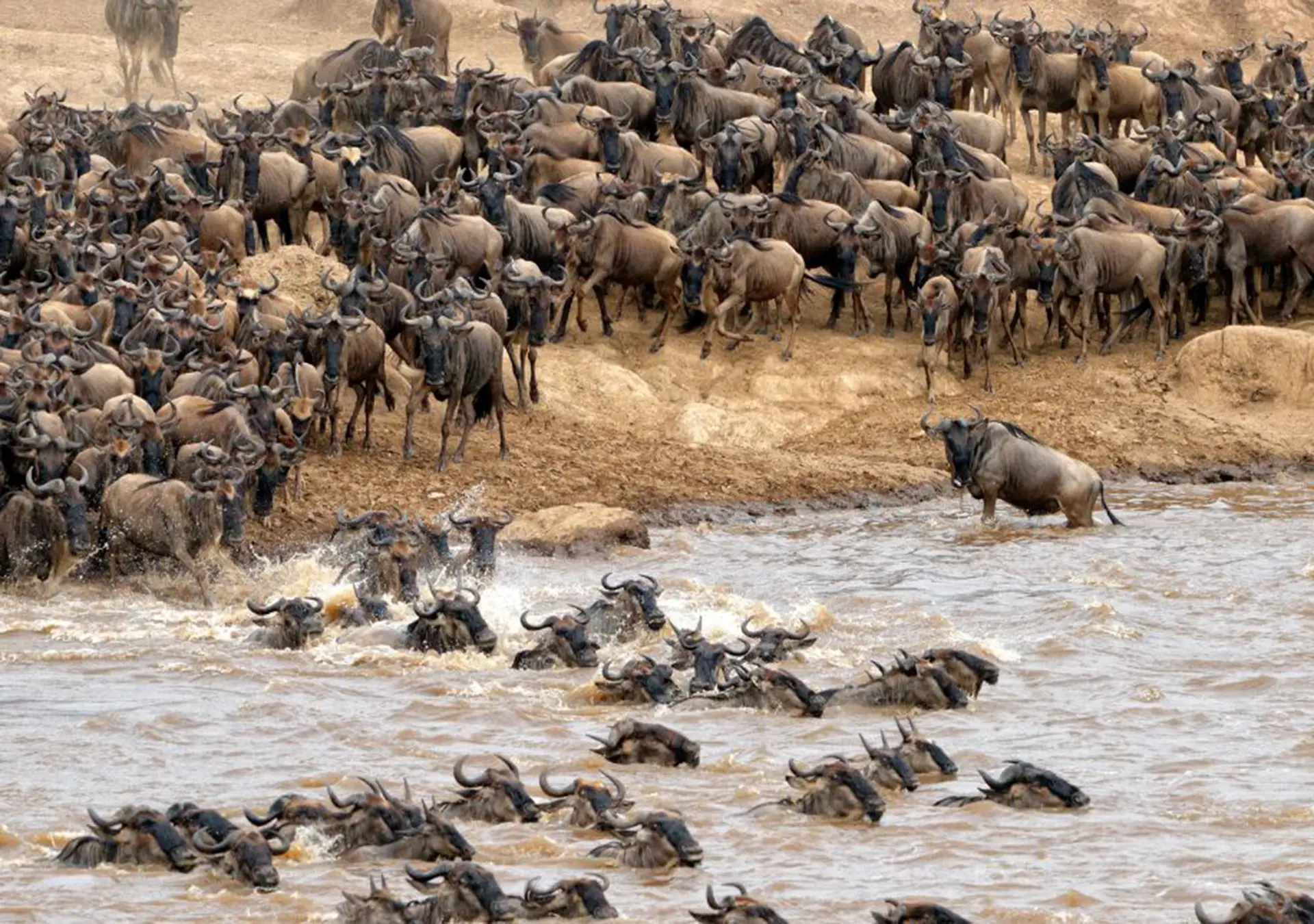
June is the beginning of the iconic river crossings. The herds can be seen around the Western Corridor and as they reach the south side of the Grumeti River, they pile up to cross the series of pools and channels. Nile crocodiles await in the Grumeti River and you can see some action during this time, but since Grumeti River doesn’t flow continuously and is just shallow, this phenomena is merely a “practice” for the hooves as they know that what’s about to happen further north is their greatest feat of all.
July-September
The incredibly bloody Mara River crossing happens during these months. Millions of wildebeests along with thousands of zebras, gazelles, and kudus rush frantically through the predator-infested Mara River, struggling for survival to get into the Masai Mara National Reserve on the other side. This spectacular event, which usually continues around October, is dubbed as the “World Cup of Wildlife”.
October
Thousands of migrating hooves die during the river crossing due to exhaustion, starvation or predation. Survivors celebrate their success by feasting on the fresh grasses in Masai Mara. Other ungulates who stayed in the Serengeti feast on the grasses of northern Serengeti. By the end of October, the migrating herds move back to southern Serengeti where grasses and water are now abundant as the short rains begin.
November
Most of the remaining herds in the Mara start moving down south, passing through western Loliondo as well as Serengeti’s Lobo area.
December
The herds cluster around the northeastern and southern regions of the Serengeti and feed on the lush grasses of the areas. By this time, the wildebeests know that calving season is just about to begin and the migration cycle starts again.
Why is the Great Migration a must-see?
The Great Migration, otherwise called Wildebeest Migration or Serengeti Migration, is the largest inland animal migration in the world. It exhibits an astounding wildlife movement, displaying over two million wildebeests stomping across the Serengeti ecosystem along with thousands of zebras, Thomson’s gazelles, impalas, and kudus. Cunningly striding behind the migrating herds are predators waiting to make a kill: lions, hyenas, leopards, cheetahs, etc. On the rivers are the huge Nile crocodiles and the very territorial hippos.
To see this event even once in your life is to witness one of the most spectacular phenomena of nature. All the action, all the drama, all the wonder create an unforgettable adventure that’s unlike anything else in the world. Plus, you can’t get this experience anywhere else but here:
- Serengeti National Park: The migrating hooves move across the Serengeti plains in a clockwise manner starting in January. Come July to October, the herds start to cross the Mara River to seek grazing in the adjacent Masai Mara. They come back to Serengeti when the rains call them around November.
- Masai Mara National Reserve: The migrating hooves start to arrive Masai Mara around July to October. They feed on the fresh grasses of the Reserve until they move back to the Serengeti in November.
A unique way to see the Great Wildebeest Migration
Seeing the migration is one thing. Seeing it from a court-side view is another. If you want the optimum wildlife experience, there is no better place you’d want to be than in:
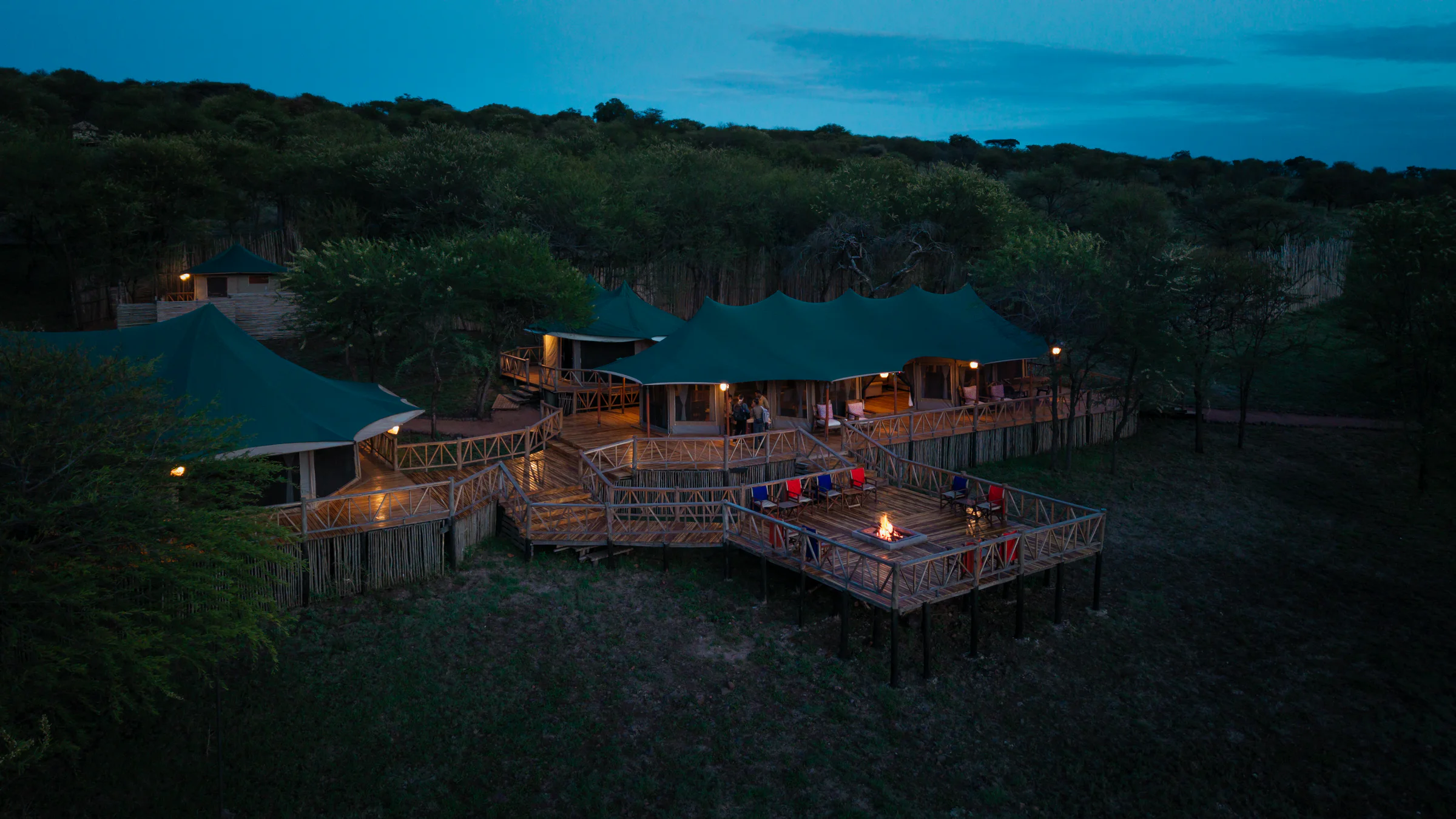
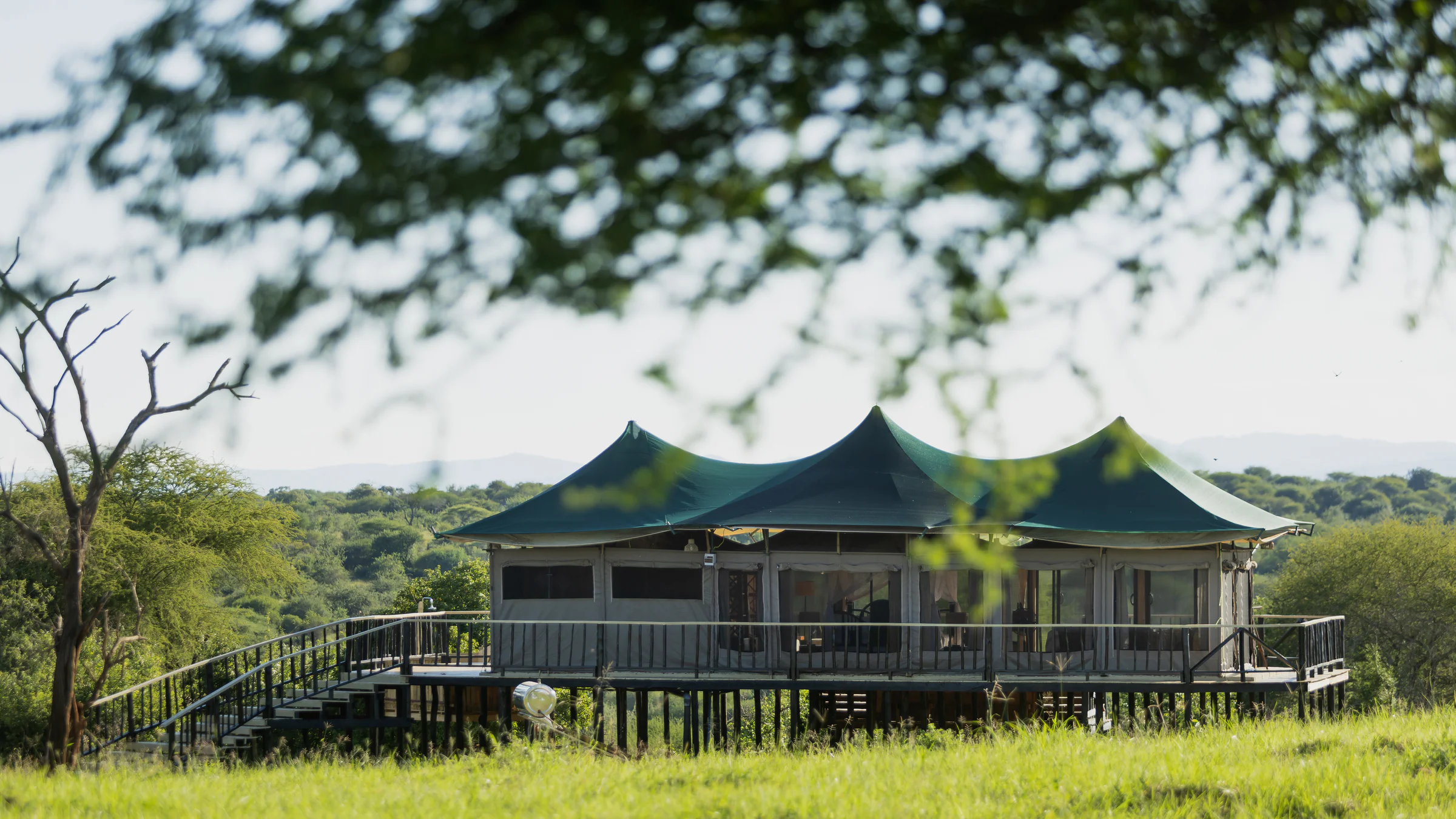
- Migration Camp: A semi-permanent/mobile camp that follows the movements of the Great Migration
- Central Camp: A permanent tented camp in the heart of Seronera where migratory herds pass by around April-May. The camp is also very near Southern Serengeti and the Western Corridor, which makes it an excellent base to see the migration’s highlights.
- Seronera Luxury Camp: A luxurious camp in Makoma Hills, Seronera which offers more privacy but still guarantees uninterrupted views of the Serengeti plains.
The Great Migration is a once in a lifetime adventure you never want to miss.
From the jaw-dropping animal movement to the classic African scenery that you can’t possibly ignore, seeing the Wildebeest Migration is indeed THE ultimate African experience.
Start planning your Tanzania safari
Our safari experts craft personalized itineraries for every interest and budget. Tell us what you are looking for.
Request a Free Quote