Track the Great Migration month by month in 2026. Our comprehensive calendar shows exactly where 1.5 million wildebeest are, what to expect, and which Acacia camp to book.
The Great Migration is the largest overland animal movement on Earth. Every year, approximately 1.5 million wildebeest, 400,000 zebra, and 200,000 gazelle travel a continuous clockwise circuit through the Serengeti-Mara ecosystem, driven by rainfall and the promise of fresh grazing. It is not a single event with a start and finish — it is a perpetual cycle of movement, birth, predation, and survival that has been playing out for millions of years.
As operators who live and work in the Serengeti ecosystem, we track the migration daily. Our guides radio herd positions, our mobile camp repositions to follow the action, and our booking team advises hundreds of travellers each year on where to be and when. This guide distils all of that knowledge into a month-by-month calendar for 2026, updated annually to reflect the latest patterns and predictions.
One critical caveat before we begin: the migration follows the rain, and rain does not follow a calendar. The timing below is based on historical patterns and our 2025-2026 observations, but nature is unpredictable. Herds can be early, late, or split into multiple groups. The best strategy is not to target a specific week but to choose a month that aligns with your interests and trust your operator to position you correctly.
Want expert help timing your migration safari? Contact our team for real-time herd position updates and personalised recommendations.
Understanding the Migration Cycle
Before diving into the month-by-month breakdown, it helps to understand the overall cycle. The migration is driven by a simple equation: grass follows rain, and grazers follow grass. The Serengeti ecosystem spans roughly 30,000 square kilometres across Tanzania and Kenya, and different areas receive rainfall at different times of year.
The cycle broadly follows this pattern:
- December-March: Herds concentrate in the Southern Serengeti and Ndutu plains for calving season. Short rains bring lush grass ideal for nursing mothers.
- April-May: Long rains push the herds northwest through the Western Corridor toward Lake Victoria.
- June-July: Herds gather in the Western Corridor and begin moving north toward the Grumeti and Mara Rivers.
- August-October: The dramatic northern push, with river crossings at the Mara River and herds entering Kenya's Masai Mara.
- November: Short rains begin in the south, and herds start their return journey southward through the Eastern Serengeti.
This cycle repeats endlessly. There is no beginning and no end — only movement.
2026 Great Migration Calendar
Here is our detailed month-by-month guide to where the herds are likely to be in 2026 and which Acacia Collections camp puts you in the best position:
| Month | Herd Location | What to Expect | Recommended Acacia Camp | Crowds |
|---|---|---|---|---|
| January | Southern Serengeti / Ndutu | Calving season begins. 8,000+ calves born daily. Predator action intense. | Enkutoto Migration Camp | Moderate |
| February | Southern Serengeti / Ndutu | Peak calving. Best time for predator-prey drama. Cheetahs, lions, hyenas active. | Enkutoto Migration Camp | High |
| March | Central / Southern Serengeti | Calving winds down. Herds begin drifting north. Green, lush landscapes. | Enkirari Wilderness Camp | Low-Moderate |
| April | Central Serengeti | Long rains. Herds moving through Seronera. Fewer tourists. Excellent value. | Enkirari Wilderness Camp | Low |
| May | Central / Western Serengeti | Herds push toward Western Corridor. Rains easing. Some rutting begins. | Enkirari Wilderness Camp | Low |
| June | Western Corridor / Grumeti | Grumeti River crossings begin. Massive crocodiles. Herds bunching up. | Enkutoto Migration Camp | Moderate |
| July | Northern Serengeti / Kogatende | Mara River crossings begin. The most dramatic spectacle of the year. | Enkutoto Migration Camp | High |
| August | Northern Serengeti / Mara River | Peak river crossings. Thousands crossing daily. Crocodile ambushes. | Enkutoto Migration Camp | Very High |
| September | Northern Serengeti / Masai Mara | Herds split between Tanzania and Kenya. Crossings continue. Dry season. | Enkutoto Migration Camp | High |
| October | Northern Serengeti / returning south | Herds begin drifting south. Last river crossings. Dry landscapes. | Enkutoto Migration Camp | Moderate |
| November | Eastern / Central Serengeti | Short rains trigger southward movement. Green flush across the plains. | Enkirari Wilderness Camp | Low |
| December | Southern Serengeti / Ndutu | Herds arrive in the south. Early calving. Festive season premium rates. | Enkutoto Migration Camp | High |
January-February: The Calving Season
The migration year begins — if we must pick a starting point — with the calving season on the short-grass plains of the Southern Serengeti and Ndutu area. Between late January and mid-March, approximately 500,000 wildebeest calves are born in a concentrated burst of new life. At the peak, around 8,000 calves arrive every single day.
Why do they all calve at once? It is a survival strategy called predator swamping. By flooding the plains with newborns simultaneously, the herds ensure that predators — no matter how many lions, cheetahs, hyenas, and wild dogs are present — simply cannot eat them all. The odds of any individual calf surviving improve dramatically when there are thousands of others to share the risk.
For safari guests, the calving season delivers non-stop drama. Newborn calves attempt to stand within minutes of birth, wobbly-legged and vulnerable. Predators patrol the edges of the herds, picking off the weak and the slow. Cheetahs sprint across the open plains in pursuits that last mere seconds. Hyena clans coordinate group hunts. It is raw, real nature at its most intense.
Our Enkutoto Migration Camp ($250-$400/night) repositions to the Ndutu area for calving season, placing you within driving distance of the densest concentrations. February is our most-requested calving month — book 6-9 months in advance.
Planning a calving season safari? Contact us now to secure your February 2026 dates before availability runs out.
March-May: The Long Rains and the Western Push
As the long rains begin in March, the southern plains become waterlogged and the short grass that drew the herds south is no longer the only option. The wildebeest begin drifting northward and westward, following new growth stimulated by the rains.
By April and May, the herds are typically moving through the Central Serengeti — the area around Seronera — and pushing toward the Western Corridor. This is green season, and it brings several advantages for savvy travellers:
- Dramatically lower rates: Accommodation costs drop 20-40% compared to peak season.
- Minimal crowds: Fewer vehicles in the park mean more intimate wildlife encounters.
- Lush landscapes: The Serengeti transforms from brown and gold to vivid green, making for stunning photography.
- Resident wildlife: Even if the main migration herds are scattered, the Central Serengeti's resident populations of lions, leopards, elephants, giraffes, and hippos are present year-round.
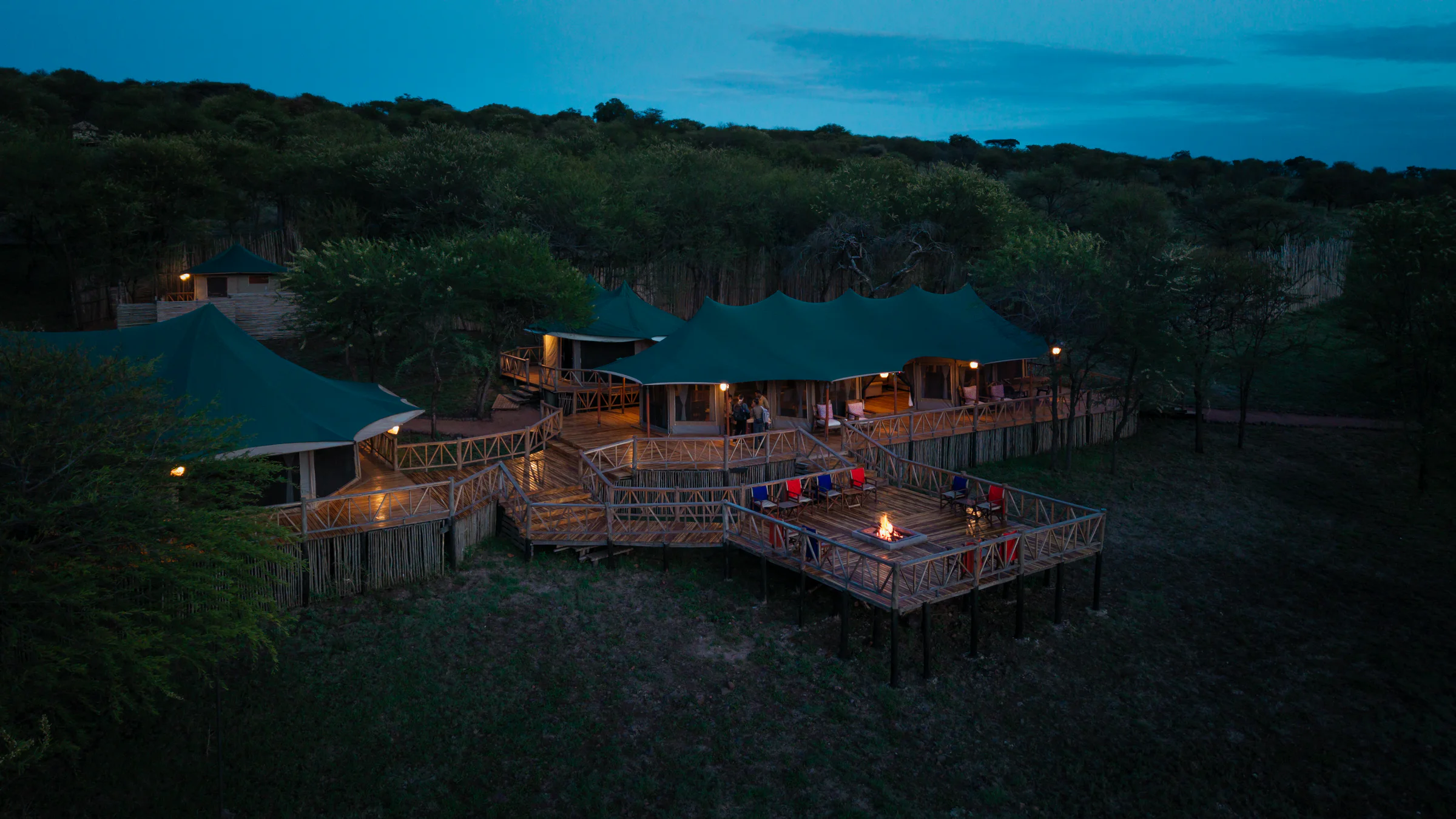
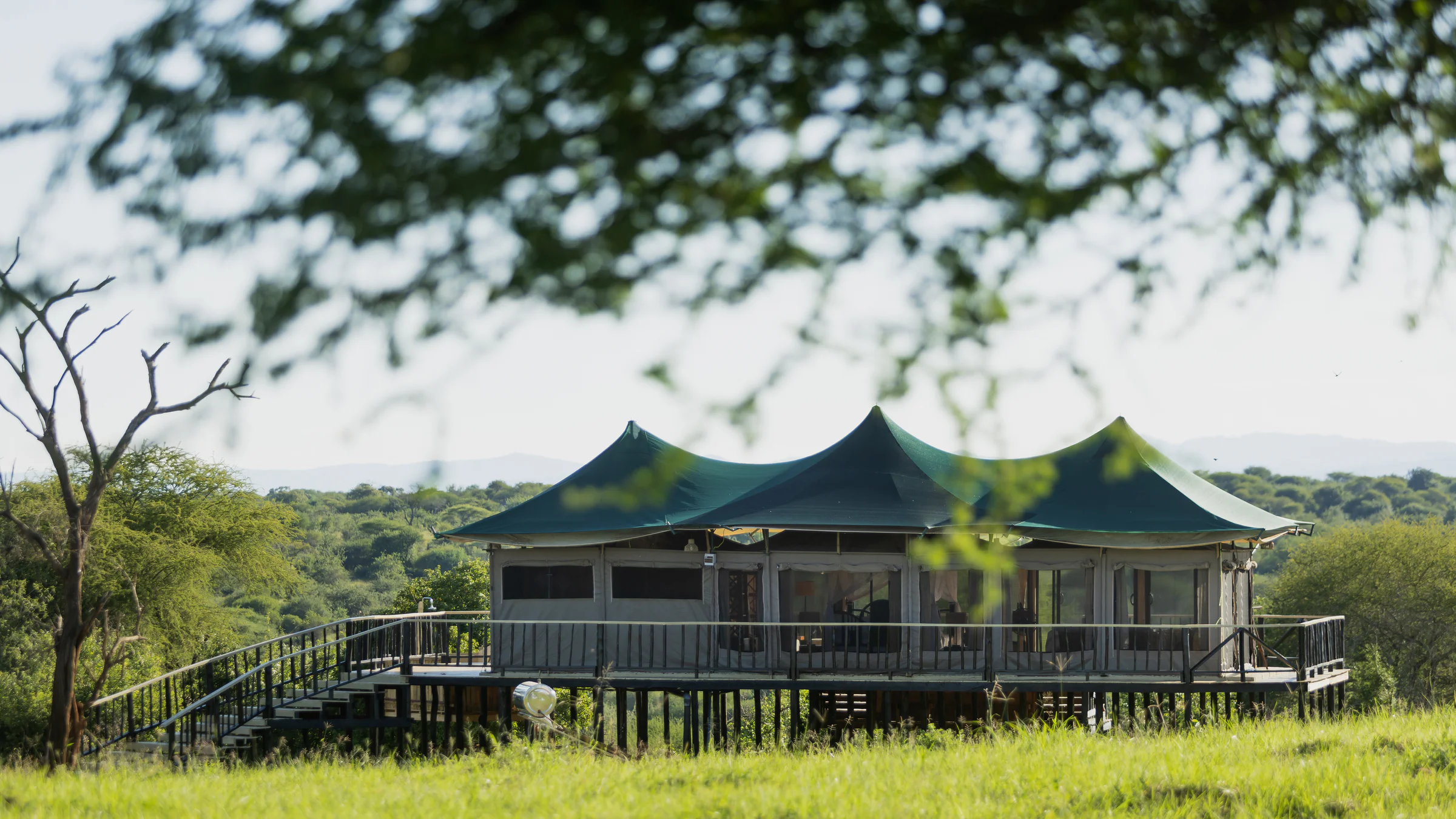
Our Enkirari Wilderness Camp ($250-$325/night) in the Central Serengeti is perfectly positioned for this period. The camp sits near the Seronera Valley, where resident wildlife is abundant regardless of migration patterns, and passing herds often move through the area in March and April.
The trade-off is rain. April is the wettest month in the Serengeti, and afternoon downpours are common. Some secondary roads can become challenging. But the mornings are typically clear, game drives proceed as normal, and the rain itself can be spectacular — dramatic skies, rainbows, and the smell of fresh rain on African soil.
Green season offers the best value. Contact us for discounted April-May rates at our Serengeti camps.
June-July: The Grumeti Crossings and the Northern Push
June marks a turning point in the migration cycle. The long rains have ended, the Western Corridor's grass is depleting, and an ancient instinct drives the herds northward toward the permanent water and green pastures of the Northern Serengeti and Kenya's Masai Mara.
The first major obstacle is the Grumeti River. While less famous than the Mara River crossings that come later, the Grumeti crossings are no less dramatic. Enormous Nile crocodiles — some over 5 metres long and among the largest in Africa — lurk in the murky water, waiting for the herds to commit to crossing. The tension as thousands of wildebeest gather on the bank, the chaos of the crossing itself, and the inevitable predation create some of the most visceral wildlife moments on the planet.
By July, the leading edge of the migration reaches the Northern Serengeti and the Mara River. This is when the iconic river crossings begin — the images that have come to define the Great Migration in the popular imagination. Thousands of wildebeest plunge into the churning water, scrambling up the far bank while crocodiles attack from below and predators wait on the other side.
Our Enkutoto Migration Camp ($250-$400/night) moves to the Northern Serengeti for this period, positioning guests within reach of the major crossing points. The camp's mobile nature means we can respond to herd movements in real time, shifting location as the action moves along the river.
August-October: Peak River Crossings
August and September are the pinnacle of the migration spectacle. The Mara River crossings are at their most frequent and dramatic, with herds crossing and re-crossing multiple times as groups on different banks respond to grazing conditions and predator pressure.
A single crossing can involve tens of thousands of animals and last for hours. The sound alone is overwhelming — the thunder of hooves, the bellowing of wildebeest, the splash of bodies hitting water, the grunts of crocodiles. It is primal, relentless, and utterly unforgettable.
This is peak season in every sense. Accommodation rates are at their highest, availability is at its tightest, and vehicle density at popular crossing points can be significant. We strongly recommend booking August and September migration safaris 9-12 months in advance. Our Enkutoto Migration Camp sells out for these months first.
October brings the tail end of the crossing season. The dry season is at its most extreme, with parched landscapes and concentrated wildlife around remaining water sources. The herds begin their gradual drift southward as scouts detect the first short rains in the southern plains. Late October offers excellent migration viewing with slightly lower rates and fewer crowds than August.
August and September 2026 dates are filling fast. Contact us today to check availability at Enkutoto Migration Camp.
November-December: The Return South
November is a transitional month. The short rains begin in the Southern Serengeti, sending a signal across the ecosystem that fresh grazing is sprouting on the Ndutu plains. The herds, now in the Northern Serengeti and parts of the Masai Mara, begin their long journey southward.
The return migration is less concentrated than the northward push. Herds move in long, scattered columns through the Eastern Serengeti, passing through areas that see relatively few tourists. It is a quieter, more contemplative migration experience — vast herds moving across green plains under dramatic rainy-season skies.
By December, the leading herds are arriving back on the southern plains, and the cycle begins again. Early calving starts in late December, and the festive season brings premium rates and a surge of visitors celebrating Christmas and New Year on safari.
For November travel, our Enkirari Wilderness Camp in the Central Serengeti is well-positioned to intercept herds moving through the area. For December, Enkutoto Migration Camp moves back to the southern plains in anticipation of the calving season.
Best Months Summary: Quick Reference
| Your Priority | Best Months | Where to Stay |
|---|---|---|
| Calving and newborns | January-February | Enkutoto Migration Camp (Southern Serengeti) |
| Dramatic river crossings | July-September | Enkutoto Migration Camp (Northern Serengeti) |
| Lowest prices and fewest crowds | April-May | Enkirari Wilderness Camp (Central Serengeti) |
| Green landscapes and birding | November-December | Enkirari Wilderness Camp |
| Best overall wildlife (non-migration) | June-October | Enkirari Wilderness Camp |
Booking Strategy for Migration Safaris
Migration safaris require more advance planning than standard Northern Circuit trips. Here is our recommended booking timeline:
- 12+ months ahead: Ideal for August-September (peak crossings) and February (peak calving). Best availability, best room selection.
- 6-9 months ahead: Good for June-July, October, and December-January. Most dates still available but premium options may be taken.
- 3-6 months ahead: Works for March-May and November (shoulder/green season). Rates are lower and availability is more flexible.
- Last minute (under 3 months): Possible in green season but very difficult for peak months. We occasionally have cancellation openings — contact us to be added to our waitlist.
Our mobile camp, Enkutoto Migration Camp ($250-$400/night), is designed specifically for migration-focused safaris. The camp physically relocates throughout the year to follow the herds, so you are always positioned in the right area regardless of when you visit. This is a significant advantage over fixed camps and lodges, which may be hundreds of kilometres from the migration during certain months.
For travellers who want to combine migration viewing with the full Northern Circuit experience, we recommend pairing Enkutoto with nights at Enkirari Wilderness Camp (Central Serengeti), Naserian Safari Camp or The Castle at Ngorongoro (Ngorongoro), and Serian Tarangire Camp (Tarangire). Browse our safari tour packages for pre-designed migration itineraries.
Migration Photography Tips
The Great Migration offers some of the most dramatic wildlife photography opportunities anywhere. Here are tips from our guides who have photographed thousands of crossings:
- Lens choice: A 100-400mm zoom covers most crossing scenarios. Bring a wide-angle (16-35mm) for landscape-scale herd shots.
- Shutter speed: Use 1/1000s or faster for crossing action. Wildebeest move erratically and slow shutter speeds produce blur.
- Positioning: Arrive at crossing points early (before 7 AM). Your guide will know the most likely crossing sites based on herd behaviour the previous day.
- Patience: Herds can gather on a riverbank for hours before crossing — or turn around and walk away. The waiting is part of the experience.
- Dust protection: The dry season generates enormous dust clouds. Bring lens cloths and a camera rain cover that doubles as dust protection.
Want a photography-focused migration safari? Contact our team to arrange extended stays at crossing points with our most experienced wildlife photography guides.
Combining Migration with the Full Northern Circuit
Many travellers want to see the migration and the Northern Circuit highlights (Ngorongoro Crater, Tarangire) in one trip. This is absolutely possible with an 8-10 day itinerary. A typical combined route during July-September:
| Days | Location | Camp | Focus |
|---|---|---|---|
| 1 | Arusha | Acacia Retreat ($140-$220) | Arrival, rest |
| 2-3 | Tarangire | Serian Tarangire Camp ($221-$443) | Elephants, baobabs |
| 4 | Ngorongoro Crater | The Castle at Ngorongoro ($290-$480) | Crater floor, Big Five |
| 5-6 | Central Serengeti | Enkirari Wilderness Camp ($250-$325) | Big cats, resident wildlife |
| 7-9 | Northern Serengeti | Enkutoto Migration Camp ($250-$400) | River crossings, migration herds |
| 10 | Fly out to Arusha or Zanzibar | - | Departure |
This itinerary covers everything — the Crater's concentrated wildlife, Tarangire's elephants, the Central Serengeti's big cats, and the Northern Serengeti's migration crossings. It is the ultimate Tanzania safari experience.
Browse our safari tour packages for pre-built migration itineraries, or contact us for a custom route based on your travel dates.
Frequently Asked Questions
Can I see the Great Migration any month of the year?
Yes. The migration is a continuous cycle with no off-season. Herds are always somewhere in the Serengeti-Mara ecosystem. The experience varies by month — calving in January-February, river crossings in July-September, vast herds on the move in between — but there is always something extraordinary to witness.
Which month is best for Great Migration river crossings?
August and September offer the most frequent and dramatic Mara River crossings. July and October also produce crossings but less consistently. June features Grumeti River crossings, which are less famous but equally spectacular. For the best odds of witnessing multiple crossings, plan a 3-4 night stay in the Northern Serengeti during August.
How far in advance should I book a migration safari?
For peak months (February, July-September), book 9-12 months in advance. Popular camps sell out early, especially mobile camps positioned at crossing points. Green season months (April-May, November) can be booked 3-6 months ahead with good availability. Contact us to start planning.
Is the Great Migration guaranteed?
The migration happens every year without fail — it has for millions of years. However, the exact timing and location of herds in any given week cannot be guaranteed. Rain patterns shift, herds split into multiple groups, and crossings happen unpredictably. A good operator like Acacia Collections maximises your chances by using real-time herd tracking and mobile camp positioning.
Can I see the migration without staying in the Serengeti?
The Great Migration occurs exclusively in the Serengeti (Tanzania) and Masai Mara (Kenya) ecosystem. You must stay in or near the Serengeti to witness it. Our Serengeti camps — Enkirari Wilderness Camp and Enkutoto Migration Camp — put you in the heart of the action. Day trips from Ngorongoro or Arusha are not practical due to distance.
Start planning your Tanzania safari
Our safari experts craft personalized itineraries for every interest and budget. Tell us what you are looking for.
Request a Free Quote