A detailed side-by-side comparison of the Serengeti and Ngorongoro Crater — wildlife, scenery, accessibility, costs, and crowd levels — from operators who run safaris in both every day.
If you only have time for one iconic Tanzanian safari destination, which should it be — the vast Serengeti or the dramatic Ngorongoro Crater? It is the question we field almost daily from travellers planning their first trip to Tanzania. And the honest answer is that both belong on your itinerary. But we understand that time and budget sometimes force a choice, so let us break it down as transparently as we can.
We operate camps in both the Serengeti and Ngorongoro, so we know these ecosystems intimately. This is not a theoretical comparison — it is grounded in thousands of game drives and years of hosting guests in each location.
Quick Comparison Table
Before we go deep, here is a side-by-side snapshot of the two destinations:
| Factor | Serengeti | Ngorongoro Crater |
|---|---|---|
| Size | 14,750 sq km | 260 sq km (crater floor) |
| Big Five | All five (rhino rare) | All five (rhino more reliable) |
| Great Migration | Yes — the main stage | No |
| Scenery | Endless savannah, kopjes, rivers | Volcanic caldera, lake, forest |
| Best Wildlife Month | Year-round, peaks Jun–Oct | Year-round, consistent |
| Crowd Levels | Low to moderate (vast area) | Moderate to high (small area) |
| Drive from Arusha | 7–8 hours (or 1.5 hr flight) | 3–4 hours |
| Minimum Days Needed | 2–3 days | 1 day (crater floor drive) |
| Avg Accommodation Cost | $250–$475/night | $230–$480/night |
| Park Entry Fee (Adult) | $60/day | $70/entry + $295 vehicle fee |
| Unique Draw | Scale, migration, big cats | Density, rhino, dramatic setting |
Need help deciding? Talk to our safari team — we will design the perfect itinerary for your time and budget.
Wildlife: What You Will See in Each
Both destinations deliver extraordinary wildlife, but the experience feels fundamentally different.
Serengeti Wildlife
The Serengeti is synonymous with the Great Migration — approximately 1.5 million wildebeest, 400,000 zebra, and 200,000 gazelles moving in a continuous cycle across the plains. Even outside migration season, the Central Serengeti around the Seronera Valley supports a staggering density of resident predators. Lion prides numbering 20 or more, leopards draped over sausage-tree branches, cheetahs scanning the plains from termite mounds — the Serengeti is the undisputed capital of big-cat country.
Elephants, hippos, giraffes, buffalo, hyenas, and over 500 bird species round out the cast. The one animal that is genuinely difficult to find in the Serengeti is the black rhinoceros. A small population exists, but sightings are rare and require patience and luck.
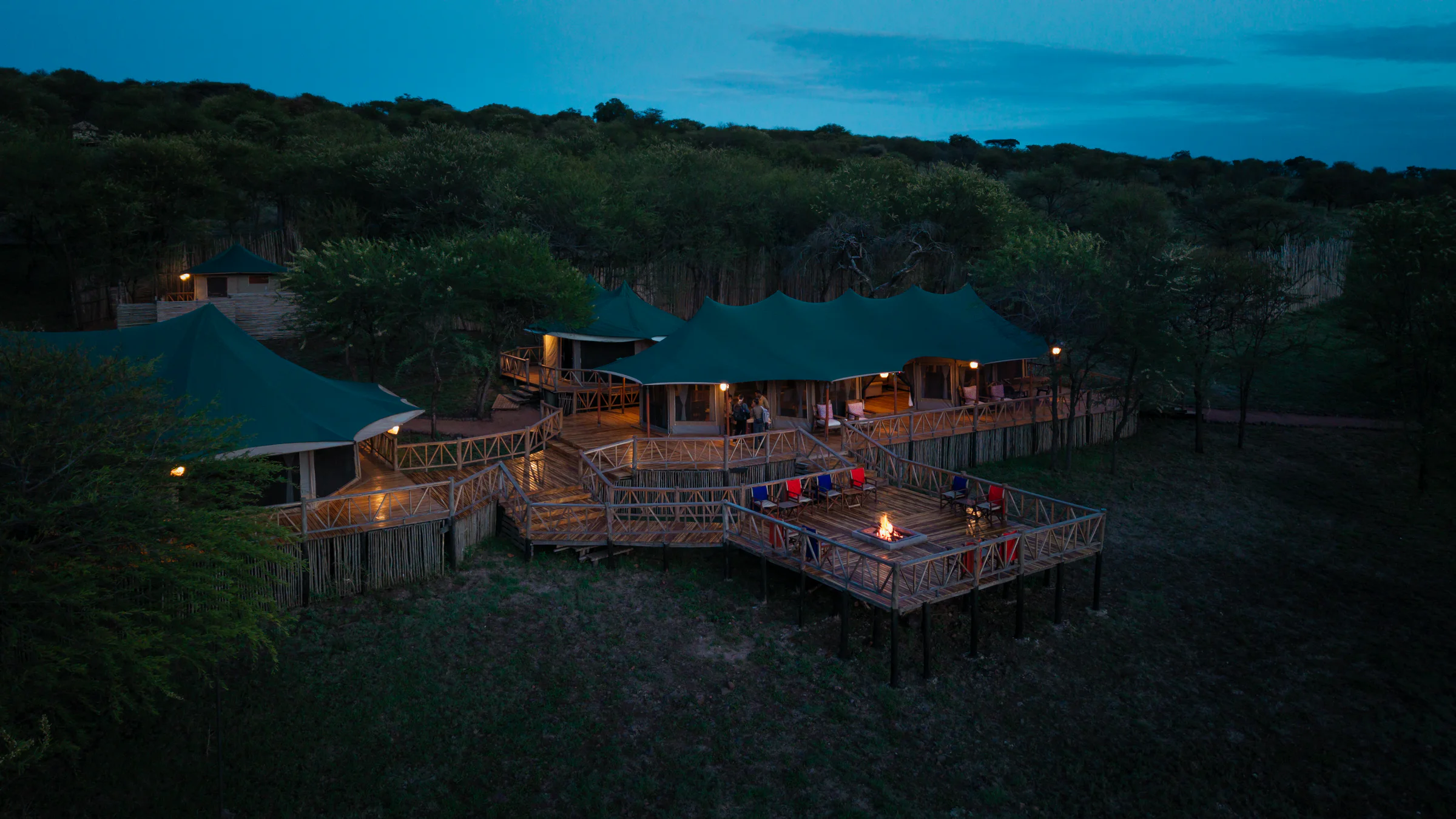
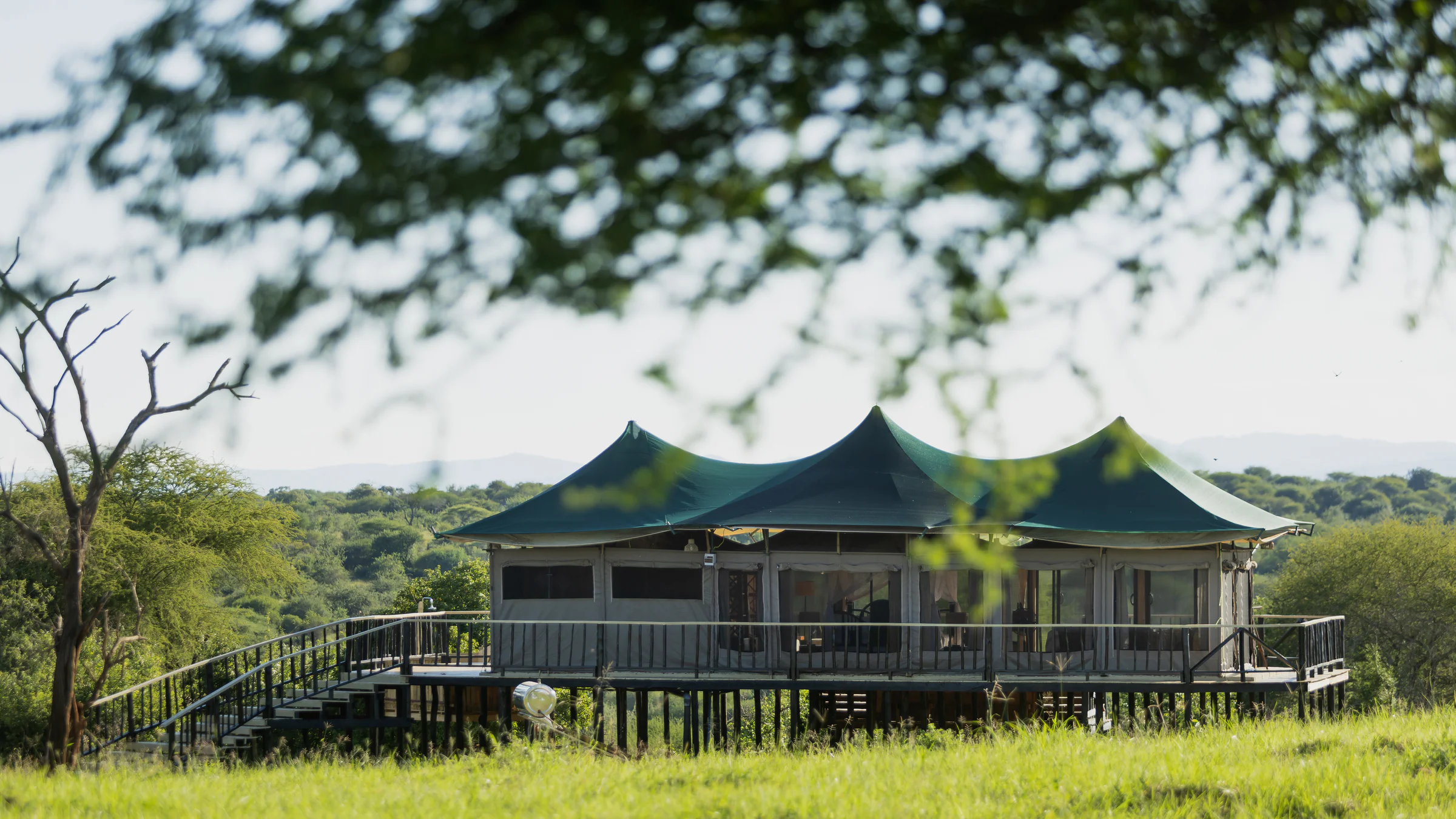
Our Enkirari Wilderness Camp ($250–$325/night) sits in the Central Serengeti, one of the best year-round wildlife zones. For migration-chasers, Enkutoto Migration Camp ($250–$400/night) follows the herds throughout the year.
Ngorongoro Wildlife
The Ngorongoro Crater is essentially a natural zoo — but with no fences and no captivity. Roughly 25,000 large animals live permanently on the 260 sq km crater floor, creating wildlife densities that are almost absurd. On a typical half-day crater drive, you will see lions, elephants, buffalo, spotted hyenas, zebra, wildebeest, flamingos, and — if fortune favours you — the critically endangered black rhinoceros.
The crater is one of the most reliable places in East Africa to spot rhinos. A stable population of around 25–30 black rhinos roams the crater floor, and our guides know their favoured feeding areas. It is not guaranteed, but the odds are far better here than almost anywhere else in Tanzania.
What the crater lacks is the migration spectacle and the sheer variety of habitats the Serengeti offers. There are no cheetahs on the crater floor (they cannot compete with the dense lion and hyena populations), and giraffe are absent due to the steep crater walls.
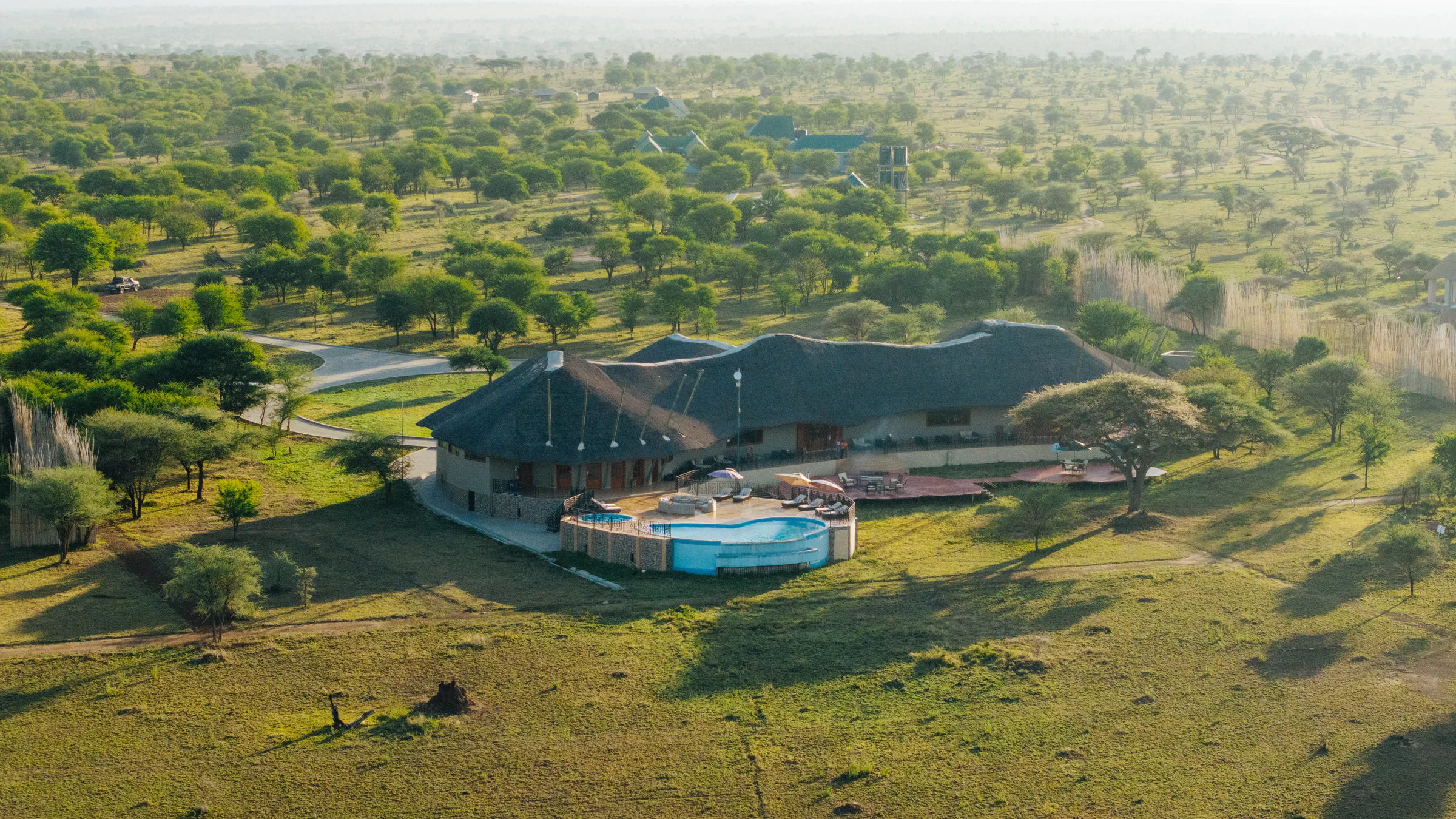
Stay at Naserian Safari Camp ($230–$380/night) or The Castle at Ngorongoro ($290–$480/night) for rim-top accommodation with crater views that will stay with you for life.
Wondering which is right for you? Contact us for a personalised recommendation.
Scenery and Landscape
The two destinations could not look more different, and both are breathtaking in their own way.
Serengeti Scenery
The name comes from the Maasai word "siringet" — endless plains. And that is exactly what you get: a horizon-to-horizon sweep of golden savannah punctuated by rocky kopjes, acacia woodlands, and seasonal rivers. The scale is humbling. You can drive for hours and see nothing but grass, sky, and wildlife. During the green season (November–May), the plains turn emerald green with wildflowers — a photographer's paradise. In the dry season, the golden tones create a classic African postcard.
The Serengeti also has dramatic variety within its borders. The Western Corridor features riverine forest along the Grumeti River. The Northern Serengeti has rolling hills and the famous Mara River. The Central Serengeti has kopjes — ancient granite outcrops that serve as lookout points for lions and leopards.
Ngorongoro Scenery
The Ngorongoro Crater is visually unlike anything else on Earth. Standing on the rim at 2,300 metres, you look down 600 metres into a near-perfect volcanic caldera 20 kilometres wide. The crater floor holds Lake Magadi (an alkaline lake often ringed with flamingos), lush marshes, open grasslands, and patches of fever-tree forest. The walls of the crater rise steeply on all sides, creating a natural amphitheatre.
The rim itself is covered in montane forest — dense, misty, and cool. Walking along the rim at sunset, with the caldera spread below you and the distant peaks of the Rift Valley on the horizon, is one of East Africa's most moving experiences.
Accessibility and Logistics
Getting to each destination involves different logistics and time commitments.
Getting to Ngorongoro
Ngorongoro is the more accessible of the two. It is approximately 3–4 hours by road from Arusha, making it feasible as a day trip (though we strongly recommend at least one overnight stay). The road is tarmac most of the way, with the final stretch on well-maintained dirt roads. No flights are needed, though charter flights are available to nearby airstrips.
Getting to the Serengeti
The Serengeti is further afield. Driving from Arusha takes 7–8 hours (passing through Ngorongoro Conservation Area en route), which is why most itineraries combine both destinations. Alternatively, scheduled light-aircraft flights from Arusha to Seronera Airstrip take about 1.5 hours and offer spectacular aerial views. Flying in saves a full day of driving and is our recommendation for itineraries of 5 days or fewer.
For guests arriving in Arusha, our Acacia Retreat ($140–$220/night) provides a comfortable overnight base before heading to either destination.
Let us handle the logistics. Get a custom itinerary from our team.
Cost Comparison
Both destinations sit in a similar price bracket, but the cost structures differ.
| Cost Factor | Serengeti | Ngorongoro Crater |
|---|---|---|
| Park Entry (per adult per day) | $60 | $70 + $295 vehicle fee |
| Budget Accommodation | $80–$150/night | $80–$150/night |
| Mid-Range Accommodation | $250–$325/night | $230–$380/night |
| Luxury Accommodation | $435–$600+/night | $290–$480/night |
| Minimum Days Recommended | 2–3 days | 1–2 days |
| Total Min Cost (mid-range, pp) | $680–$1,100 | $530–$830 |
The Ngorongoro Crater has a higher single-day entry cost due to the vehicle fee, but you need fewer days there. The Serengeti is cheaper per day but rewards longer stays. Over a multi-day itinerary that includes both, the costs balance out.
Best Time to Visit Each
Both destinations are year-round, but seasonal dynamics differ.
Serengeti Timing
The Serengeti's wildlife experience changes dramatically with the seasons because the Great Migration moves through different sectors. June to October brings the famous river crossings in the north. January to March is calving season in the south. The Central Serengeti around Enkirari Wilderness Camp is excellent year-round thanks to resident populations of big cats and large herbivores.
Ngorongoro Timing
The crater is remarkably consistent. Because its ecosystem is self-contained, wildlife does not migrate in or out. The dry season (June–October) offers the best visibility and easiest spotting, but the green season delivers lush scenery and fewer vehicles on the crater floor. The crater rarely disappoints in any month.
Crowd Levels
This is an important factor that many guides overlook.
The Serengeti, despite its fame, rarely feels crowded. At 14,750 square kilometres, even during peak season the vehicle density is low outside the most popular spots (Seronera, key river crossing points). Drive 30 minutes off the main circuits and you may not see another vehicle for hours. Our camps in the Serengeti — Olkarien Eco Safari Camp ($435–$474/night) and Enkirari Wilderness Camp — are positioned to maximise wildlife and minimise vehicle congestion.
The Ngorongoro Crater, by contrast, can feel busy. The crater floor is only 260 square kilometres, and all vehicles enter through just a few access roads. During peak season (July–September, December–January), you may share major sightings with 10–20 other vehicles. Early morning descents help — the first vehicles down often get the best sightings with the fewest neighbours.
Want to avoid the crowds? Ask us about timing and positioning strategies.
So Which Should You Choose?
Here is our honest guidance based on different traveller profiles:
| If You Want… | Choose | Why |
|---|---|---|
| The Great Migration | Serengeti | The migration only passes through the Serengeti |
| Best rhino chances | Ngorongoro | Stable population of 25–30 black rhinos on crater floor |
| Big cat spectacle | Serengeti | Highest density of lions, leopards, and cheetahs in Africa |
| Compact, one-day experience | Ngorongoro | A single crater drive can deliver the Big Five |
| Photography | Both (lean Serengeti) | Serengeti offers more variety; crater has dramatic backdrops |
| Fewer crowds | Serengeti | Vast area means lower vehicle density |
| Dramatic scenery | Ngorongoro | The caldera is visually unmatched |
| More than 3 days | Serengeti | Its size rewards extended stays |
| Short trip (1–2 days safari) | Ngorongoro | Closer to Arusha, efficient wildlife delivery |
Our Recommendation: Do Both
We say it honestly — if your schedule allows 5 or more days, visit both. They complement each other perfectly. The Ngorongoro Crater delivers a concentrated, dramatic, geologically stunning wildlife experience. The Serengeti delivers scale, solitude, predator drama, and the migration. Together, they form the backbone of the Northern Circuit, which is why our most popular safari tour packages include both.
A typical Northern Circuit itinerary spends 1–2 days at Ngorongoro and 2–3 days in the Serengeti, with a night in Tarangire at Serian Tarangire Camp ($221–$443/night) for the elephants and baobabs. This combination covers the Big Five, the migration (in season), and three dramatically different landscapes.
Ready to experience both? Contact our safari team for a tailored Northern Circuit itinerary.
Photography: Which Destination is More Photogenic?
Both destinations are a photographer's dream, but they offer very different types of shots. The Serengeti excels at vast landscape compositions — lone acacia trees silhouetted against golden sunsets, endless herds stretching to the horizon, and dramatic predator-prey action shots with open-sky backdrops. The flat terrain and enormous skies create a sense of scale that is almost impossible to capture anywhere else. Our guests at Olkarien Eco Safari Camp ($435–$474/night) often remark that every direction is a potential cover shot for National Geographic.
The Ngorongoro Crater offers a different photographic palette. The dramatic caldera walls provide a natural frame for wildlife portraits, and the play of light and shadow as clouds pass over the crater rim creates constantly changing conditions. Flamingos on Lake Magadi, rhinos against the forested crater walls, and elephants crossing the marshes all deliver images with depth and drama. The elevated vantage points from the crater rim — available from both Naserian Safari Camp and The Castle at Ngorongoro — offer aerial-style landscape shots that are unique to this location.
For serious wildlife photographers, we recommend bringing a 200–400mm telephoto lens for both destinations, a wide-angle lens (16–35mm) for Serengeti landscapes and Ngorongoro panoramas, and plenty of memory cards. Our safari vehicles have pop-up roofs that provide excellent shooting platforms with stable window-ledge support.
Frequently Asked Questions
Can I visit both the Serengeti and Ngorongoro in one trip?
Absolutely, and we strongly recommend it. Most Northern Circuit itineraries include both destinations. You drive through the Ngorongoro Conservation Area en route to the Serengeti, so combining them is logistically natural. A 5–7 day safari covers both comfortably.
Is the Ngorongoro Crater worth the high vehicle fee?
Yes. The $295 vehicle fee is steep, but the crater delivers one of the most concentrated wildlife experiences on Earth. Most guests describe their crater day as a highlight of their entire trip. The fee also supports conservation of this UNESCO World Heritage Site.
Which destination is better for first-time safari-goers?
The Ngorongoro Crater is an excellent introduction to safari because wildlife density is so high that sightings are virtually guaranteed. However, the Serengeti offers a more immersive, quintessential African safari experience. If this is your only safari ever, we lean towards including both.
How many days do I need for each?
One full day is sufficient for a Ngorongoro Crater drive, though spending a night on the rim enhances the experience enormously. The Serengeti rewards at least 2–3 full days — its vastness means more time equals more discoveries and more unforgettable moments.
Are the Serengeti and Ngorongoro safe for families with children?
Yes, both destinations are safe for families. Children under 5 are not permitted on the Ngorongoro Crater floor, but all ages are welcome in the Serengeti. Our camps are family-friendly and can arrange age-appropriate activities. Ask us about family safari options.
Start planning your Tanzania safari
Our safari experts craft personalized itineraries for every interest and budget. Tell us what you are looking for.
Request a Free Quote