Is a Serengeti balloon safari worth the $500–$600 price tag? We break down exactly what you get — sunrise flight, champagne breakfast, best season to fly — plus honest booking tips.
The $600 Question: Is a Serengeti Balloon Safari Worth It?
A hot air balloon ride over the Serengeti is one of those bucket-list experiences that sounds almost too magical to be real — drifting silently above the African savannah at dawn, watching herds of wildebeest and zebra move across golden plains, then landing for a champagne breakfast in the bush. But at $500 to $600 per person, it is also one of the most expensive single activities you can add to a Tanzania safari. So is the serengeti balloon safari cost justified? After years of arranging these flights for our guests and hearing their feedback, we can give you an honest, detailed answer.
In this guide, we cover exactly what the experience includes, what the money pays for, the best time of year to fly, practical booking advice, and — most importantly — whether we think it is worth every dollar.
What Exactly Does $500–$600 Buy You?
The serengeti balloon safari cost covers a comprehensive experience that lasts approximately four to five hours from pickup to drop-off. Here is what is included in the standard package:
| Component | Details | Approximate Value |
|---|---|---|
| Pre-dawn transfer | Vehicle pickup from your camp at 4:30–5:00 AM | Included |
| Hot coffee and briefing | Light refreshments at the launch site | Included |
| Balloon flight | 60 minutes airborne over the Serengeti plains | Core experience |
| Champagne toast | Sparkling wine upon landing in the bush | Included |
| Bush breakfast | Full English-style breakfast served on white linen | ~$40–60 value |
| Flight certificate | Personalised souvenir certificate | Included |
| Return transfer | Vehicle back to your camp or to a game drive | Included |
| Park fees contribution | TANAPA fees for commercial balloon operation | ~$100 |
| Insurance and safety | Passenger liability and equipment insurance | ~$50 |
The balloon baskets typically carry 12 to 16 passengers, divided into compartments. Most operators in the Serengeti use Cameron or Ultramagic balloons — the same manufacturers trusted by commercial operators worldwide. Your pilot is a licensed commercial balloonist with hundreds of hours of Serengeti flying experience.
The Flight: Hour by Hour
Understanding the timeline helps set realistic expectations. Here is how a typical balloon safari morning unfolds:
4:30 AM — The Wake-Up Call
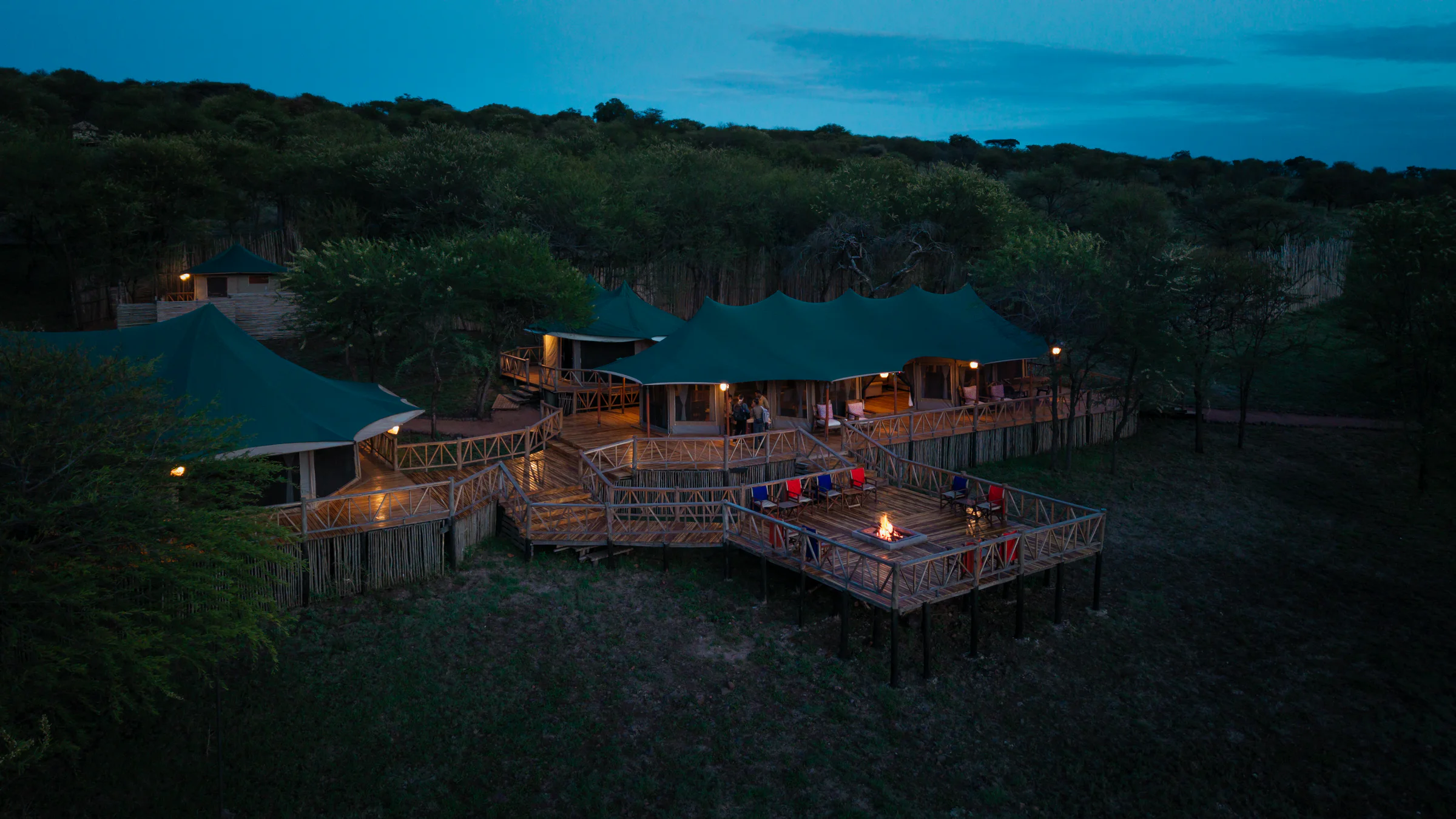
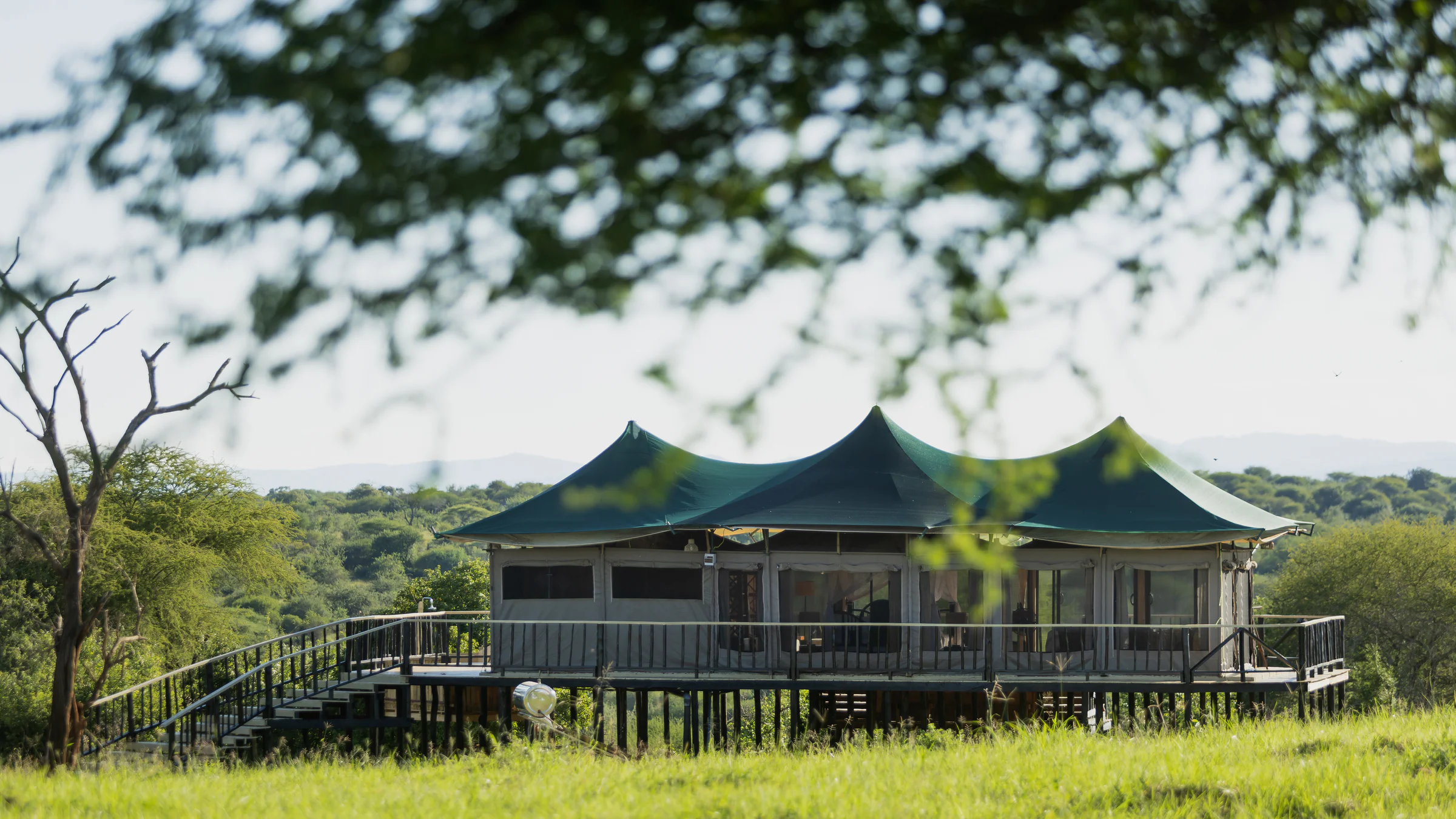
Your alarm will go off in the dark. This is non-negotiable — balloon flights are strictly sunrise affairs because the calm, cool morning air provides the safest and most stable flying conditions. A vehicle from the balloon operator collects you from your camp. If you are staying at Enkirari Wilderness Camp or Olkarien Gorge Camp, the transfer to the launch site is typically 20 to 40 minutes depending on location.
5:30 AM — The Inflation
Watching the balloon inflate is an experience in itself. The massive envelope — typically 30 metres tall when fully inflated — lies flat on the ground while powerful fans fill it with cold air. Then the burners fire, and the balloon slowly rises upright against the pre-dawn sky. The crew invites you to climb into the basket (lying horizontally at first), and within minutes you lift off gently into the air.
5:45 AM — Sunrise Over the Serengeti
This is the moment that justifies the cost for most guests. As the balloon rises to between 300 and 1,500 metres, the sun breaks over the eastern horizon, flooding the Serengeti's endless plains with golden light. The silence is profound — no engine noise, no road vibration, just the occasional blast of the burner and the gentle creak of the basket. Below you, the savannah slowly reveals its inhabitants: scattered herds of wildebeest, lone giraffes moving between acacia stands, and sometimes a pride of lions still lounging from their night's rest.
The pilot controls altitude by heating the air inside the envelope, drifting the balloon lower to observe wildlife more closely or rising higher for panoramic views. On a clear morning, you can see for 50 kilometres or more in every direction — an ocean of grass and scattered kopjes stretching to the horizon.
6:30–6:45 AM — The Landing
After approximately 60 minutes of flight time, the pilot selects a landing spot — usually a flat area of short grass chosen for safety and accessibility. Landings can range from gentle stand-up touchdowns to slightly bumpier arrivals depending on wind conditions. The crew on the ground tracks the balloon by vehicle and arrives within minutes to help passengers disembark.
7:00 AM — Champagne Breakfast in the Bush
This is the second highlight. The ground crew sets up a full breakfast in the middle of the Serengeti — white linen tablecloths, silver chafing dishes, champagne on ice, and a spread that includes eggs, bacon, sausages, fresh fruit, pastries, and Tanzanian coffee. You eat breakfast with the balloon still partially inflated behind you and the Serengeti stretching out in every direction. It is surreal, celebratory, and utterly unique.
Best Season for a Balloon Safari
Balloon safaris operate year-round in the Serengeti, but certain months deliver significantly better experiences:
Peak season (June to October): The dry season offers the clearest skies, the most predictable flying conditions, and the highest concentration of wildlife on the plains. If the migration herds are in the central or northern Serengeti during your visit, a balloon flight over the columns of wildebeest is genuinely one of the most spectacular sights on Earth.
Calving season (January to March): When the migration is in the southern Serengeti for calving, balloon flights from the Seronera or southern launch sites can pass directly over hundreds of thousands of wildebeest and their newborn calves. Our Enkutoto Migration Camp positions you perfectly for this season, as it moves with the herds.
Green season (November to May): Flights still operate, but afternoon rain showers can occasionally affect morning conditions, leading to cancellations. The landscape is spectacularly green, which makes for dramatic photographs, but wildlife is more dispersed. Prices may be slightly lower.
Avoid: The heavy rain weeks in April and early May see the highest cancellation rates. If a balloon safari is a priority for your trip, schedule it during the dry season for maximum reliability.
Our Honest Assessment: Is It Worth the Money?
After arranging hundreds of balloon safaris and collecting guest feedback over many years, our honest answer is: yes, for most people it is worth the cost — but with caveats.
The balloon safari delivers an experience you simply cannot replicate from a game vehicle. The perspective, the silence, the sunrise, and the champagne breakfast combine into something genuinely transcendent. Guests who do it almost universally describe it as one of the highlights of their entire trip. Many tell us it was the single best travel experience of their lives.
However, we would not recommend it in the following circumstances:
- If $600 would mean cutting your safari short by a day. An extra day of game driving in the Serengeti, with multiple hours of close-up wildlife encounters, delivers more total value than one hour in a balloon. Never sacrifice safari days for a balloon flight.
- If you have severe fear of heights. The basket sides are about chest height and the flight is gentle, but if heights cause you genuine distress, the experience will be stressful rather than enjoyable.
- If you are visiting during heavy rain season. The risk of cancellation in April and early May is significant, and rescheduling is often impossible if you are moving to a different park the next day.
- If you are a very serious wildlife photographer. While the aerial perspective is unique, the distance from animals and the movement of the basket make close-up wildlife photography difficult. A full morning game drive will yield better individual animal photos.
For everyone else — couples celebrating an anniversary, families on a once-in-a-lifetime trip, travellers who want the full Serengeti experience — the balloon safari is money well spent. It creates memories and emotions that a game drive, no matter how extraordinary, simply cannot match.
Practical Booking Tips
Here are the tips we share with every guest considering a balloon safari:
- Book at least two months in advance during peak season (June to October). Balloon flights sell out, and last-minute availability is rare. Green season is more flexible.
- Schedule your balloon flight for the second or third morning of your Serengeti stay, not the first. This gives you a buffer day in case of weather cancellation, and it means you arrive at the launch site already acclimatised to early safari mornings.
- Wear warm layers. Temperatures at altitude before sunrise can drop below 10°C, even in the Serengeti. A fleece and a light windbreaker are essential. You will warm up quickly once the sun rises.
- Bring your camera but manage expectations. The best photos from a balloon are wide landscapes, not close-up animal portraits. A wide-angle lens (24–70 mm) is more useful than a telephoto.
- Eat lightly the night before. Some guests experience mild motion sensitivity, although the flight is far smoother than most people expect.
- Combine with a game drive. After the champagne breakfast, most operators will transfer you to a game vehicle for a continuation drive rather than back to camp. This maximises your day — you get the balloon at dawn and a full morning game drive after.
We can arrange balloon safaris for guests staying at any of our Serengeti properties, including Enkirari Wilderness Camp ($250–$325/night), Olkarien Gorge Camp ($435–$474/night), and Enkutoto Migration Camp ($250–$400/night). Our camp managers handle all logistics so you do not need to coordinate with the balloon operator directly.
How the Cost Compares to Other Safari Extras
| Activity | Typical Cost | Duration | Uniqueness Factor |
|---|---|---|---|
| Balloon safari | $500–$600 | 4–5 hours total (1 hour flight) | Exceptional — once-in-a-lifetime aerial perspective |
| Walking safari | $50–$100 | 2–3 hours | High — ground-level bush experience |
| Night game drive | $40–$80 | 2–3 hours | Moderate — nocturnal species sightings |
| Maasai village visit | $30–$50 | 1–2 hours | Moderate — cultural exchange |
| Photography guide | $150–$300/day | Full day | High — expert guidance for serious photographers |
| Bush dinner | $80–$150 | Evening | High — dining under stars in the wild |
The balloon safari is by far the most expensive single activity, but it is also the most unique. Nothing else on this list offers the same combination of perspective, emotion, and exclusivity. If budget allows, we recommend doing the balloon safari and at least one walking safari — the combination of aerial and ground-level perspectives gives you a comprehensive understanding of the Serengeti ecosystem.
Safety and What to Know
Balloon safaris in the Serengeti have an excellent safety record. All operators are licensed by the Tanzania Civil Aviation Authority and subject to regular inspections. Pilots hold commercial balloon licences with mandatory recurrent training. Flights are cancelled if wind speeds exceed safe limits — typically above 10 knots at ground level — which is why early morning is the standard flight window.
Passengers must be able to stand for the duration of the flight and brace for landing (which involves bending your knees and holding the basket handles). Most operators set a minimum age of 7 and a maximum weight of 120 to 130 kg per passenger. Pregnant travellers are generally not permitted to fly.
If your flight is cancelled due to weather, you receive a full refund. Cancellation decisions are made by the pilot on the morning of the flight, typically by 5:00 AM. Our camp staff will inform you immediately and help you plan an alternative activity — usually an early morning game drive to catch the predators at their most active.
Frequently Asked Questions
How much does a Serengeti balloon safari cost in 2026?
The standard serengeti balloon safari cost ranges from $500 to $600 per person, depending on the operator and the season. This is a fixed price that includes the flight, champagne breakfast, transfers, and all applicable fees. Children typically pay the same rate as adults. Some operators offer slight discounts during the green season (November to May).
How long is the actual balloon flight?
The flight itself lasts approximately 60 minutes. The total experience — from camp pickup to return — takes about four to five hours. This includes the pre-dawn transfer, inflation viewing, the flight, champagne toast, bush breakfast, and the return drive to your camp or to a game drive continuation.
What happens if the balloon flight is cancelled due to weather?
You receive a full refund if the flight is cancelled for weather reasons. The pilot makes the final decision on the morning of the flight based on wind conditions. We always recommend scheduling your balloon flight early in your Serengeti stay so that you have a backup day available if cancellation occurs.
Can I do a balloon safari during the Great Migration?
Absolutely — and this is arguably the best time to fly. When the migration herds are on the Serengeti plains, a balloon safari provides a jaw-dropping aerial view of hundreds of thousands of wildebeest and zebra moving across the landscape. The best months depend on the herds' location: January to March in the south for calving, and July to September in the north for river crossings.
Is the champagne breakfast really worth it, or is it just a gimmick?
It is genuinely special. The breakfast is a full, high-quality meal served on white linen in the middle of the Serengeti — not a token glass of fizz. You sit with fellow passengers and your pilot, sharing the adrenaline of the flight, while giraffes and zebra graze in the background. It is theatrical, yes, but it is also delicious and perfectly complements the emotional high of the flight. Most of our guests rank the breakfast as the second highlight after the sunrise itself.
Ready to Book Your Serengeti Balloon Safari?
If a balloon safari is on your bucket list, we are here to make it happen seamlessly. We arrange balloon flights for guests at all of our Serengeti camps, handling the logistics so you can focus on the experience. Whether you are staying at the accessible Enkirari Wilderness Camp or the eco-luxury Olkarien Gorge Camp, we will coordinate your pickup, confirm your booking, and ensure you are in the right place at the right time.
Contact Acacia Collections to add a balloon safari to your Serengeti itinerary. We will pair it with the perfect camp, the best season, and a game drive schedule that makes your Serengeti days truly unforgettable.
Start planning your Tanzania safari
Our safari experts craft personalized itineraries for every interest and budget. Tell us what you are looking for.
Request a Free Quote